

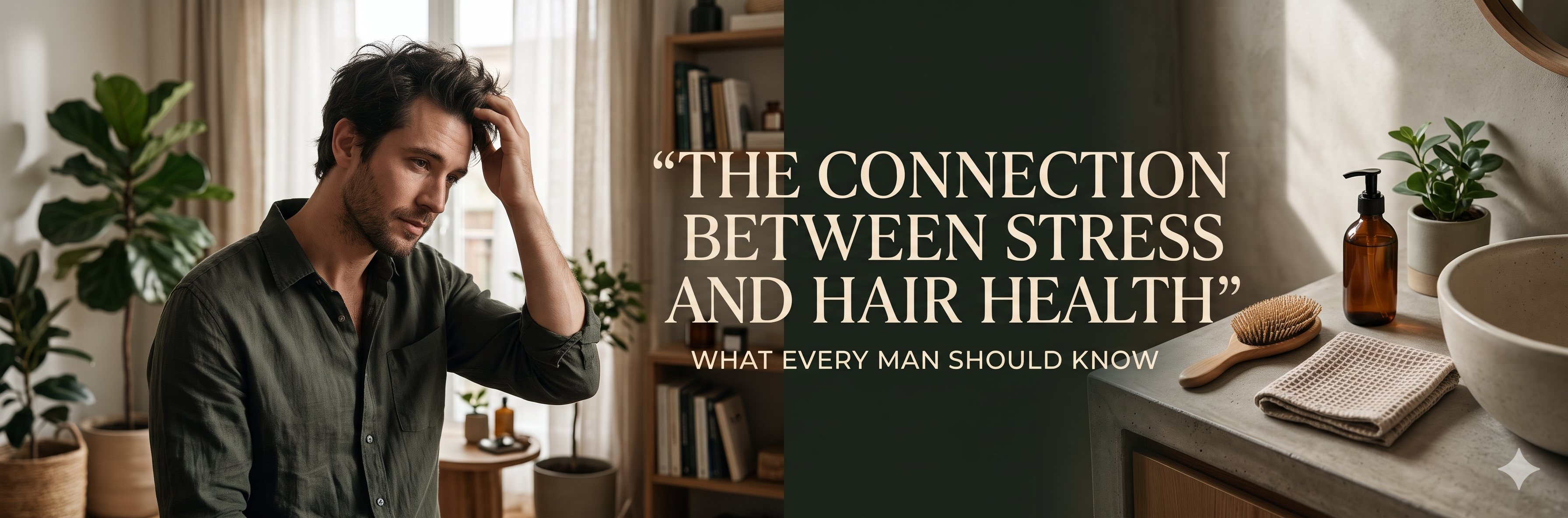
The Connection Between Stress And Hair Health: What Every Man Should Know
Stress is a normal part of modern life. Work deadlines, family responsibilities, financial pressure, and busy schedules can all take a toll on your well-being. But stress doesn't only affect your mood or energy levels. It can also influence your hair health.
For men, changes in hair shedding, texture, or overall appearance can sometimes be connected to prolonged stress. Understanding this relationship can help you make better grooming choices and recognise when it's time to seek professional advice.
1. How Stress Can Affect Hair Growth
Hair grows in a natural cycle consisting of three main stages:
Anagen: The active growth phase.
Catagen: A short transition phase.
Telogen: The resting phase, after which the hair eventually sheds.
Significant physical or emotional stress can disrupt this cycle. In some cases, more hair follicles than usual enter the resting phase, leading to increased shedding several weeks or months later. This condition is known as telogen effluvium.
You may notice more hair than usual on your pillow, in the shower, or on your comb. The good news is that stress-related shedding is often temporary, although recovery can take several months once the underlying trigger is addressed.
2. Signs That Stress May Be Affecting Your Hair
Stress-related hair changes can look different from one man to another. Some common signs include:
Increased shedding: More hair falling out during washing or brushing.
Reduced volume: Hair may appear less full than before.
Changes in styling: Hair might feel harder to manage or seem thinner.
Noticeable changes after a stressful period: Shedding may become apparent weeks or months after a difficult experience.
However, hair loss can have several causes, including genetics, nutritional deficiencies, hormonal changes, and certain medical conditions. Stress is only one possible factor.
If shedding is persistent, sudden, patchy, or accompanied by scalp irritation, consult a dermatologist rather than assuming stress is the cause.
3. Stress, Sleep, and Your Daily Routine
Stress often affects more than one part of your lifestyle. It can interfere with sleep, change eating habits, and make it harder to maintain consistent self-care.
These factors may indirectly affect hair health.
For example, poor sleep can leave you feeling exhausted, while an unbalanced diet may make it difficult to get the nutrients your body needs for normal hair growth.
A few simple habits can help support your overall well-being:
Maintain a consistent sleep schedule.
Eat balanced meals with adequate protein and a variety of nutrients.
Stay hydrated throughout the day.
Make time for physical activity.
Find practical ways to manage daily stress.
There is no single routine that guarantees thicker hair, but looking after your general health creates a better foundation for healthy hair.
4. Why Gentle Hair Care Matters During Stressful Periods
When life gets busy, grooming habits are often neglected. You might wash your hair irregularly, use excessive heat, or style it aggressively to save time.
If your hair is already shedding or feels fragile, avoid unnecessary stress on the hair itself.
Consider these habits:
Use a shampoo suited to your scalp and hair type.
Avoid excessive heat from blow-dryers and styling tools.
Don't pull tightly on your hair when styling.
Brush or comb gently, especially when hair is wet.
Avoid harsh scratching or aggressive scalp massage.
Remember that a haircut or grooming treatment cannot stop stress-related hair shedding, but a suitable routine can help keep your hair looking neat and manageable.
5. How the Right Haircut Can Improve Your Appearance
When your hair feels less dense or has become difficult to style, choosing the right haircut can make a noticeable difference to your overall appearance.
A skilled barber can assess your hair texture, natural growth direction, and current length before recommending a suitable style.
Depending on your hair, options may include:
Textured crops: Create a natural, structured appearance.
Short fades: Keep the sides clean while maintaining a balanced shape.
Classic short cuts: Offer a simple, low-maintenance option.
Taper styles: Provide a neat finish without removing too much length.
6. When Should You Seek Professional Advice?
Not every change in hair density is caused by stress. Male pattern hair loss, scalp conditions, medication, and other health factors can also contribute.
Consider speaking with a dermatologist if you notice:
Hair shedding that continues for several months.
Sudden or patchy hair loss.
A rapidly changing hairline.
Scalp redness, itching, pain, or scaling.
Hair loss alongside other unexplained symptoms.
A medical professional can help identify the cause and recommend appropriate treatment. A barber can support your grooming routine, but diagnosing hair-loss conditions requires medical expertise.
7. Make Grooming Part of Your Stress-Management Routine
A regular grooming routine can be a simple way to create time for yourself. Getting a haircut, maintaining your beard, or enjoying a professional hair wash can help you feel refreshed and more organised.
It won't remove the causes of stress or treat hair loss, but it can support a positive self-care routine.
At BarbBros Gents Salon in DLRC (Dubailand Residential Complex), Dubai, we make men's grooming straightforward and comfortable. Whether you prefer a clean fade, a classic haircut, or a well-maintained beard, our team can help you find a style that suits your everyday routine.
Final Thoughts
Stress and hair health are connected, but the relationship is not always straightforward. Prolonged stress may contribute to temporary shedding, while sleep, nutrition, genetics, and general health also play important roles.
Pay attention to changes in your hair, maintain gentle grooming habits, and seek medical advice when hair loss becomes persistent or unusual.
Looking after yourself is not just about appearance. It's about building consistent habits that help you feel confident and well.
Call or WhatsApp: +971 557258411